Mon – Fri: 8:30am – 5:30pm | Sat & Sun: Closed South East England
jsmdiagnostics@gmail.com 07711 934 905

Timing Belts

The timing belt synchronises your engine's camshaft with the crankshaft, ensuring the valves open and close at precisely the right moment in relation to the pistons. It is one of the most critical components in the engine, but commonly overlooked.

Key facts about timing belts:

  • Degrades with age and mileage, often with no outward warning signs
  • Typically replaced every 5 years or 60,000 miles, but intervals vary by manufacturer
  • We always check the manufacturer schedule for your specific vehicle
  • Replacement includes the belt, tensioner, idler pulleys and water pump as a complete kit
  • A broken timing belt means instant engine failure with no warning

Don't wait for symptoms. A snapped timing belt is rarely survivable for the engine. Bent valves, damaged pistons and a wrecked cylinder head are the typical result. Replacement on schedule is a fraction of the cost of an engine rebuild.

Enquire for a Quote
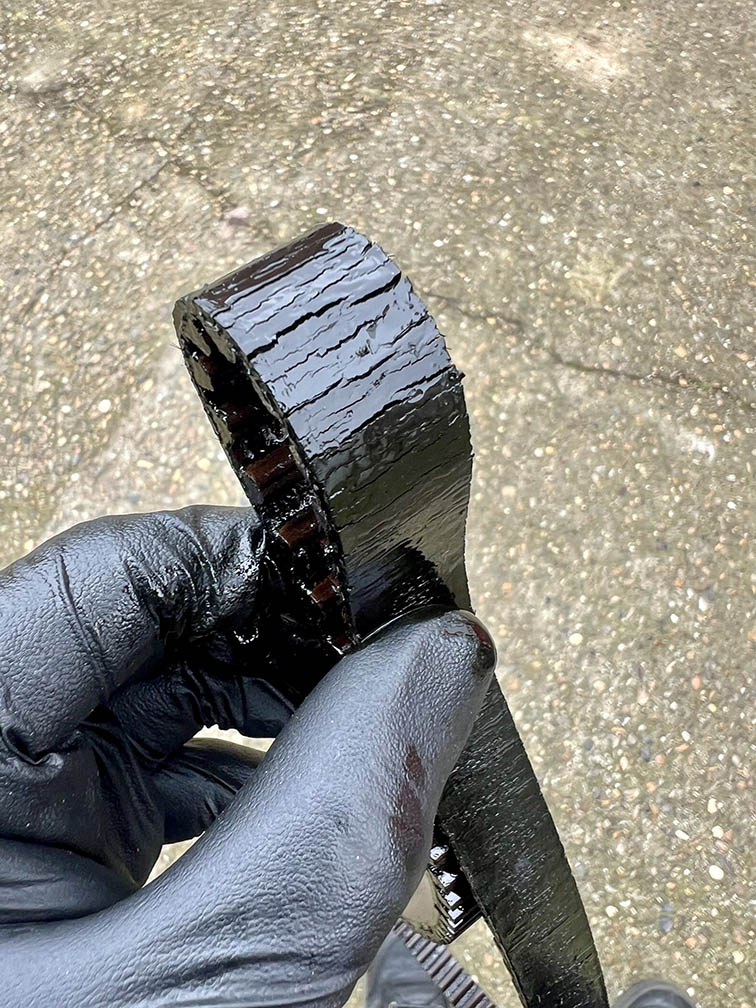
Worn and oil-soaked timing belt removed from a vehicle engine

Common Questions

Intervals vary by manufacturer and engine, but as a general guide most timing belts are due every 5 years or 60,000 miles, whichever comes first. Some vehicles have longer intervals and some shorter. We always refer to the manufacturer schedule for your specific vehicle and engine before advising on replacement.

We always replace the timing belt as a complete kit rather than the belt alone. A full kit includes the belt, tensioner, idler pulleys and, where applicable, the water pump. Since the water pump is driven by the timing belt on many engines, replacing it at the same time avoids the cost of stripping the engine again should it fail shortly afterwards.

On an interference engine, which covers the majority of modern cars, a snapped timing belt causes the pistons and valves to collide at high speed. The result is typically bent valves, a damaged cylinder head and in severe cases cracked pistons or a destroyed engine. The repair bill is substantial, and in many cases the engine is beyond economic repair. Replacement on schedule is always the far cheaper option.

Yes. Timing belts degrade internally and can fail without any prior warning. The absence of symptoms gives no indication of belt condition. Replacement is based on age and mileage, not on how the car feels to drive. A belt that looks fine from the outside can be critically weakened internally.

Unfortunately we are unable to fit customer-supplied parts. Our insurance requires that all parts are sourced and supplied by us, and it also allows us to ensure that everything fitted to your vehicle meets the quality and safety standards we work to.

Timing Chains

Timing chains are widely assumed to last the life of the engine and never require attention. This is one of the most expensive misconceptions in motoring.

Chains stretch over time. The plastic guides that route and support the chain wear down with use. The hydraulic tensioner that maintains correct chain tension relies entirely on clean, regular oil changes to function correctly. Infrequent servicing starves the tensioner of oil pressure and dramatically accelerates wear on both the guides and the chain itself. As the chain stretches, it can jump a tooth on the sprocket, throwing the engine's timing out. The result is misfires, loss of power, rough running and, if left unattended, catastrophic internal engine damage.

The most common early warning sign is a rattle or clatter on a cold start that disappears within a few seconds as oil pressure builds. This is the chain slapping against the guides before the hydraulic tensioner pressurises. Do not ignore it.

Regular oil changes are the single best preventative measure. If you hear a startup rattle, have it checked immediately before the chain stretches further or a guide fails completely.

Enquire for a Quote
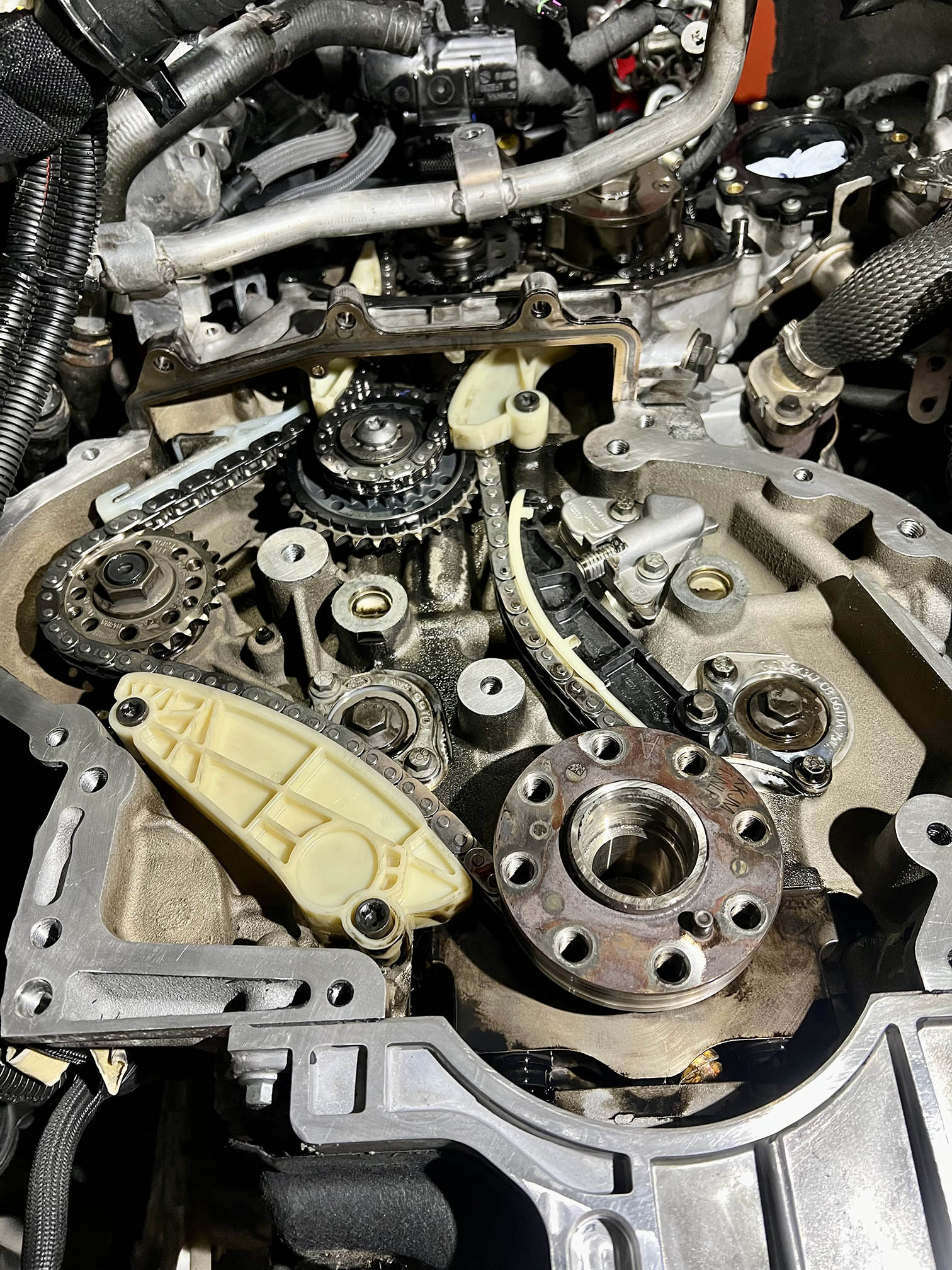
Timing chain assembly with worn guides exposed during replacement by JSM Diagnostics

Common Questions

Yes, in many cases. Unlike a timing belt, a chain is metal and does not have a fixed replacement interval, but that does not mean it lasts indefinitely. Chains stretch, guides wear and tensioners weaken over time. The rate at which this happens depends heavily on how well the vehicle has been serviced. Many manufacturers have issued technical service bulletins acknowledging premature timing chain wear on specific engines, and we see chain failures regularly on vehicles with as little as 60,000 miles on the clock.

The single biggest factor is infrequent oil changes. The hydraulic chain tensioner requires adequate oil pressure to maintain correct chain tension. Old, dirty or low oil reduces that pressure and leaves the chain slack, allowing it to slap against the guides and accelerate wear on both. High mileage, extended service intervals and using the wrong oil grade are the most common causes of premature timing chain failure.

A cold-start rattle that clears within a few seconds is almost always the timing chain. When the engine is cold, oil drains away from the tensioner. On startup, before oil pressure builds, the tensioner cannot hold the chain taut and it rattles against the guides. Once oil pressure builds, the tensioner pressurises and the noise stops. This is an early warning sign, not something to wait on. The longer it continues, the more the chain and guides wear.

Regular servicing is the most effective preventative measure. Keeping to the manufacturer's oil change intervals using the correct oil grade ensures the tensioner always has clean oil at the right pressure. If your vehicle is due a service or overdue one, book it in. If you already hear a startup rattle, get a diagnostic check carried out before the problem progresses.

Unfortunately we are unable to fit customer-supplied parts. Our insurance requires that all parts are sourced and supplied by us, and it also allows us to ensure that everything fitted to your vehicle meets the quality and safety standards we work to.

Ready to Book?

Mon – Fri: 8:30am – 5:30pm |
Sat & Sun: Closed

Quick Message

Call us: 07711 934 905
Mon – Fri: 8:30am – 5:30pm